Excessive Adjustment
Αndronikos Chrysanthopoulos, Optometrist | PhD Candidate, University of West Attica
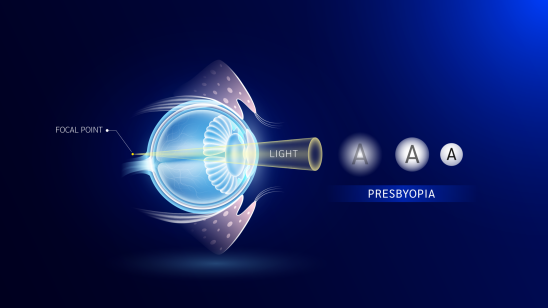
The text examines accommodation as an essential visual mechanism that enables the eye to adjust its refractive power and maintain clear vision at different distances. Accommodation is mainly triggered by retinal blur and works closely with convergence to support comfortable binocular vision, especially during near tasks. When this system does not function properly, symptoms such as blurred vision, eye strain, reading fatigue, headaches, diplopia, and reduced visual performance may occur.
The main focus of the text is accommodative excess, particularly accommodative spasm and spasm of the near reflex. These conditions involve an excessive accommodative response that does not correspond to the actual visual demand. In more complete cases, accommodative spasm may appear together with excessive convergence or esotropia and pupillary miosis. Patients may present with fluctuating refractive findings, intermittent blurred vision, pseudomyopia, visual discomfort, dizziness, and difficulty maintaining clear vision. Although the condition is often functional or psychogenic, it can also be related to head trauma, neurological disorders, systemic diseases, medication use, uncorrected hyperopia, overcorrected myopia, or binocular vision problems such as high exophoria. The text also emphasizes the importance of systematic clinical evaluation. Tests such as MEM retinoscopy, FCC, positive and negative relative accommodation, amplitude of accommodation, and monocular and binocular accommodative facility are used to assess accommodative and binocular function. These tests help identify whether the patient has difficulty activating or relaxing accommodation and whether binocular interaction contributes to the symptoms.
In conclusion, accommodative spasm is a complex and often intermittent visual dysfunction that should not be diagnosed from a single clinical finding. A complete assessment is necessary, and cycloplegic refraction is especially important for distinguishing true myopia from pseudomyopia. Early recognition can help prevent incorrect refractive correction and improve visual comfort and performance.